
Nora's Ovarian Cancer Symptoms
🌀 Something Was Off: A Quiet Storm in My Body
September 2024 – March 2025
“I didn’t wake up one day knowing something was wrong. It was more like a slow unraveling—tiny threads tugging at my attention, each one whispering, ‘Maybe it’s just pre-menopause.’ Or stress. Or the holidays. Or nothing.”
Looking back, my body was speaking. And I was politely nodding, sipping cranberry juice, and moving on
Nora's Symptoms
Denial isn’t always loud. Sometimes it’s quiet, dressed up as logic and wrapped in routine.

Persistent Symptoms


Care Map March 2025
This table outlines the diagnostic and surgical procedures I underwent in March 2025, along with their corresponding insurance coverage status and clinical findings. It is intended to provide a transparent view of the financial and medical trajectory of my care—from initial symptom evaluation to post-operative recovery.


April 2025 didn’t whisper—it roared. This timeline shows the rhythm of my days: chemo, crashes, comfort food regrets, and moments of grace. Each bar is a reminder that even when the body falters, the spirit keeps showing up.”


💡 How I Managed the Cost of Cancer Care: A 6-Month Overview
Affording cancer treatment isn’t just about numbers—it’s about navigating systems, making tough choices, and leaning on every available resource. Over six months, I relied on a combination of employment income, work-related benefits, personal savings, and support programs to cover the cost of care.
🧩 Key Components of Coverage
-
Employment & Income
Staying employed during the early months gave me steady income and access to essential benefits. Work was more than a job—it was my financial lifeline. -
Healthcare Benefits & Insurance
Employer-sponsored insurance covered major treatment costs, including chemotherapy and hospital stays. Benefits like a Health Savings Account (HSA) helped with deductibles and co-pays. -
Personal Savings
I used savings to bridge gaps—especially early on, before insurance fully covered my cost of care. -
Short-Term Leave
When treatment intensified, I transitioned to short-term leave July thru August. Benefits continued, but I leaned more heavily on insurance and support programs to manage costs. -
Support Services
Cancer support programs—emotional support thru Nurse care manager is a work benefit program.
🧭 What Helped Most
-
Having work-based coverage from the start.
-
Using savings strategically to manage out-of-pocket costs.
-
Accessing support programs during treatment and leave.
-
Returning to work in September will bridge the gap reintroducing me to the work stream benifits


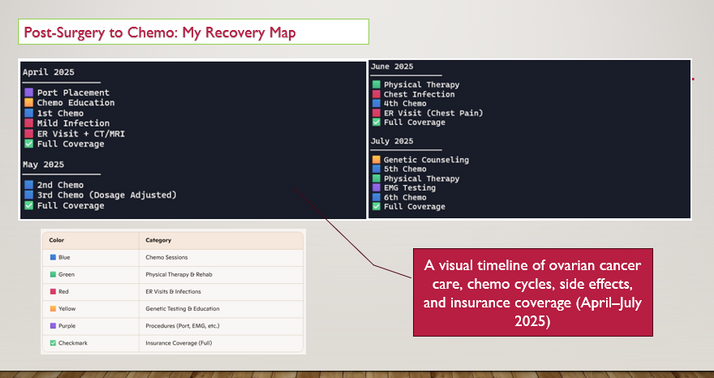
Over the past few months, I’ve made a lot of decisions about my health — some urgent, some planned, and some emotional. Each one came from paying attention to my body, asking questions, and trusting myself. With support from Mike, Jacob, my care team, and friends, I moved through ER visits, treatment, recovery, and returning to work. This timeline isn’t just about what happened — it’s about how I chose to respond, one step at a time.
